It is difficult to imagine Łódź without Manufaktura. Throughout the day, families gather beside the fountains, friends meet over coffee beneath the red brick façades and visitors drift between museums, restaurants and independent shops. What feels like the city's natural meeting place today was once one of Europe's largest textile factories, where thousands of workers kept machines running from dawn until dusk.
Few places tell the story of Łódź quite so vividly. The buildings have witnessed the city's remarkable rise during the Industrial Revolution, the upheaval of two world wars, the communist era and the collapse of the textile industry before finding a new purpose in the twenty-first century. The familiar brick walls that define Manufaktura today are not simply a backdrop for modern life. They are among the most recognisable reminders of the city that earned Łódź its reputation as the 'Polish Manchester'.
The Factory That Helped Build Łódź
When Izrael Kalmanowicz Poznański began expanding his textile business on Ogrodowa Street in 1871, Łódź was growing at an astonishing pace. Farmers, craftsmen and entrepreneurs arrived from across the region and beyond, drawn by opportunities created by the booming textile trade. Polish, Jewish, German and Russian communities all played a part in shaping a city that, within only a few decades, had become one of Europe's leading manufacturing centres.
Poznański proved to be one of the city's most ambitious industrialists. His factory grew steadily until it occupied an enormous site with weaving mills, spinning mills, warehouses, dye houses, workshops and its own power facilities. The scale of the enterprise was extraordinary for its time.
By the early years of the twentieth century, around 7,000 people were employed there, making the complex one of the largest industrial workplaces in Central Europe. For many families in Łódź, life revolved around the factory, whether on the production floor or in the surrounding neighbourhoods that developed alongside it.
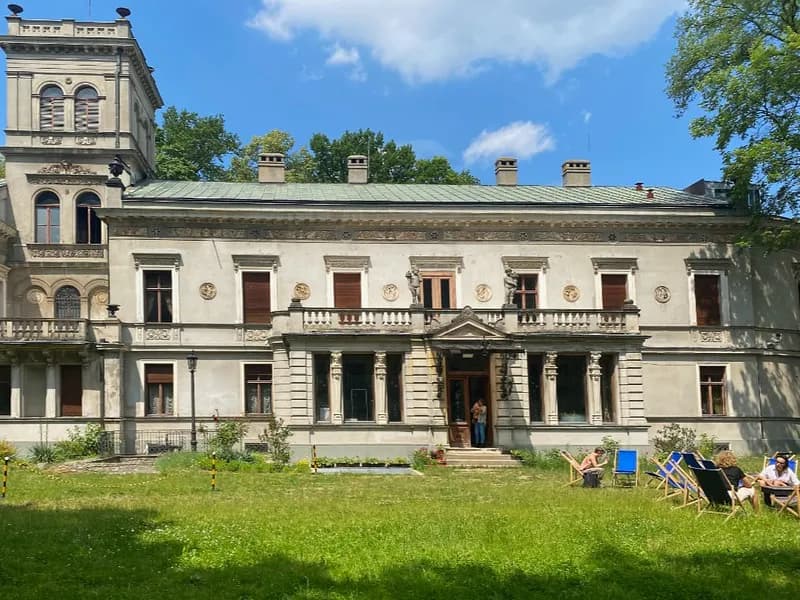
Standing just beyond the factory buildings was Poznański's richly decorated palace, an unmistakable symbol of the wealth generated by the city's cotton industry. Today, it serves a very different purpose as the Museum of the City of Łódź, preserving the stories of the people who helped shape the city's identity.
Changing with the City
The fortunes of the factory reflected those of Łódź itself.
Following Izrael Poznański's death in 1900, the business continued under his family before facing increasing economic challenges during the turbulent decades that followed. After the Second World War, the factory was nationalised and continued producing textiles under the name Poltex throughout the communist period.
For generations, the factory remained part of everyday life. The sound of machinery, shift changes and streams of workers were familiar sights around Ogrodowa Street for decades.
When textile production eventually came to an end in the early 1990s, the vast complex fell silent. Like many former industrial cities across Europe, Łódź faced difficult questions about what should become of the buildings that had once driven its economy.
Rather than sweeping away the past, the city chose to preserve it.
Following an extensive restoration, Manufaktura opened in 2006, giving new life to one of Łódź's greatest industrial landmarks while protecting its distinctive nineteenth century architecture.
Where History Meets Everyday Life
Unlike many modern shopping centres, Manufaktura has never lost its sense of place.
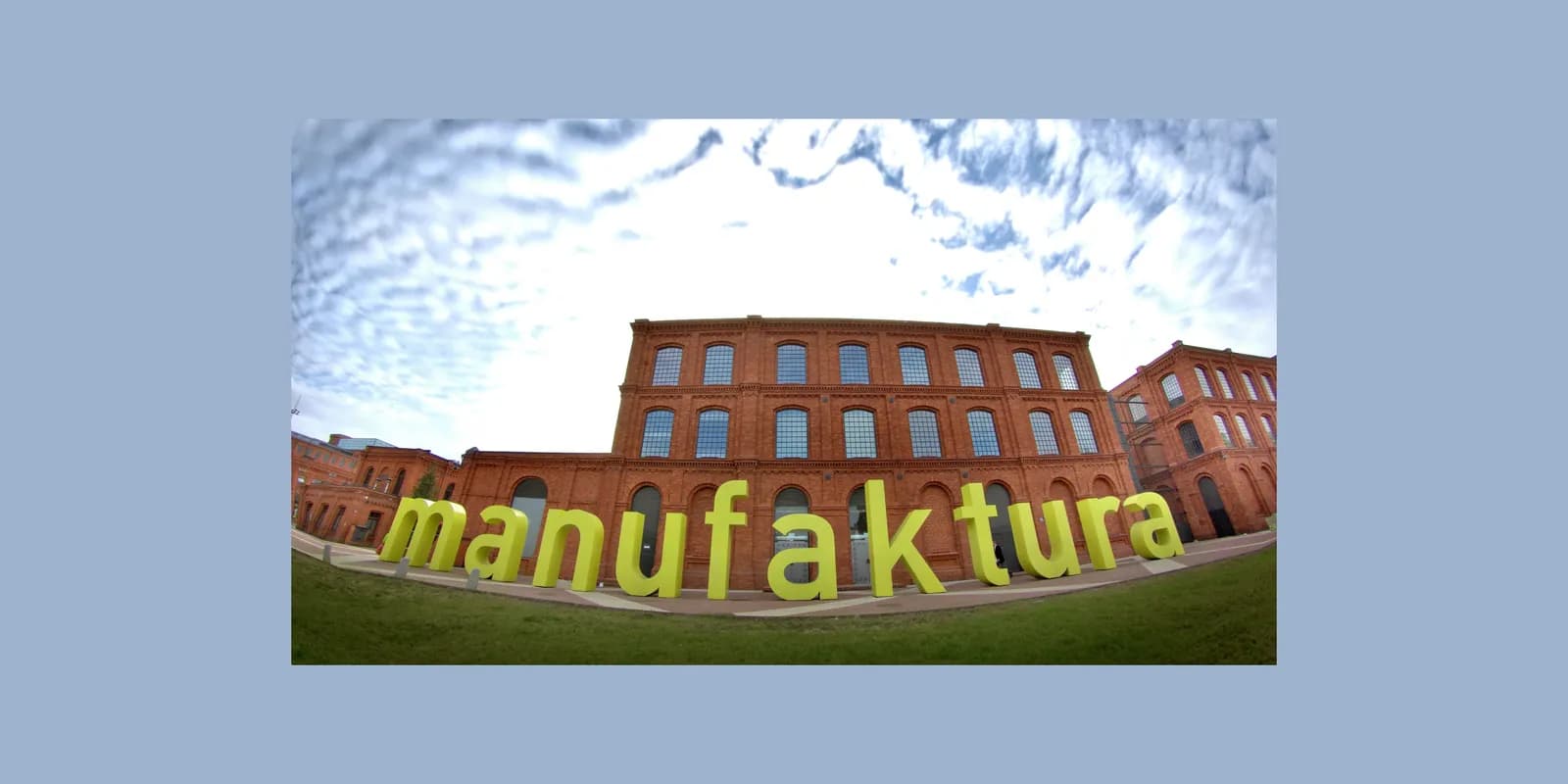
The towering brick buildings still dominate the skyline along Ogrodowa Street much as they did more than a century ago. Walking through the complex, it is easy to notice details that survived the transformation, from the original industrial architecture to the monumental entrance gate that once welcomed workers arriving for another day on the factory floor.
Inside the former mill buildings, history sits comfortably alongside contemporary life. Visitors can explore the Museum of the Factory to discover how cotton was processed and how one of Europe's largest textile enterprises operated, before stepping back into the lively central square where concerts, seasonal events and local celebrations now bring people together throughout the year.
It is this contrast that gives Manufaktura its distinctive atmosphere. The buildings no longer echo with machinery, but they remain full of activity in a way that continues the site's long tradition as one of the city's busiest gathering places.
A Landmark with Stories Around Every Corner
Manufaktura occupies around 27 hectares, making it one of the largest former industrial complexes in Europe to have been successfully adapted for public use. Yet its significance extends well beyond its size.
The project became one of Poland's earliest and most admired examples of industrial regeneration, demonstrating that historic factories could be restored rather than demolished. Much of the original red brick architecture was retained, ensuring the character of the former textile works remained intact while creating space for shops, restaurants, museums and cultural venues.
For many residents, Manufaktura is simply part of everyday life. For others, it offers a glimpse into the remarkable story of a city that grew from a small settlement into one of Europe's great industrial centres within the space of a single century.
Still at the Heart of Łódź
Cities continue to evolve, but some places retain a unique ability to connect the past with the present.
More than 150 years after construction first began on Izrael Poznański's factory, the site remains one of the defining landmarks of Łódź. Children play where cotton bales were once transported, visitors pause outside buildings that employed thousands of textile workers, and the city's industrial past remains woven into its everyday life.
Manufaktura is no longer powered by steam engines or spinning machines, but it continues to perform the role it has always held at the heart of Łódź, bringing people together in a place that reflects the city's resilience, ambition and remarkable history.
See more: How Łódź Became an Industrial Capital
Source and image credit: Manufaktura